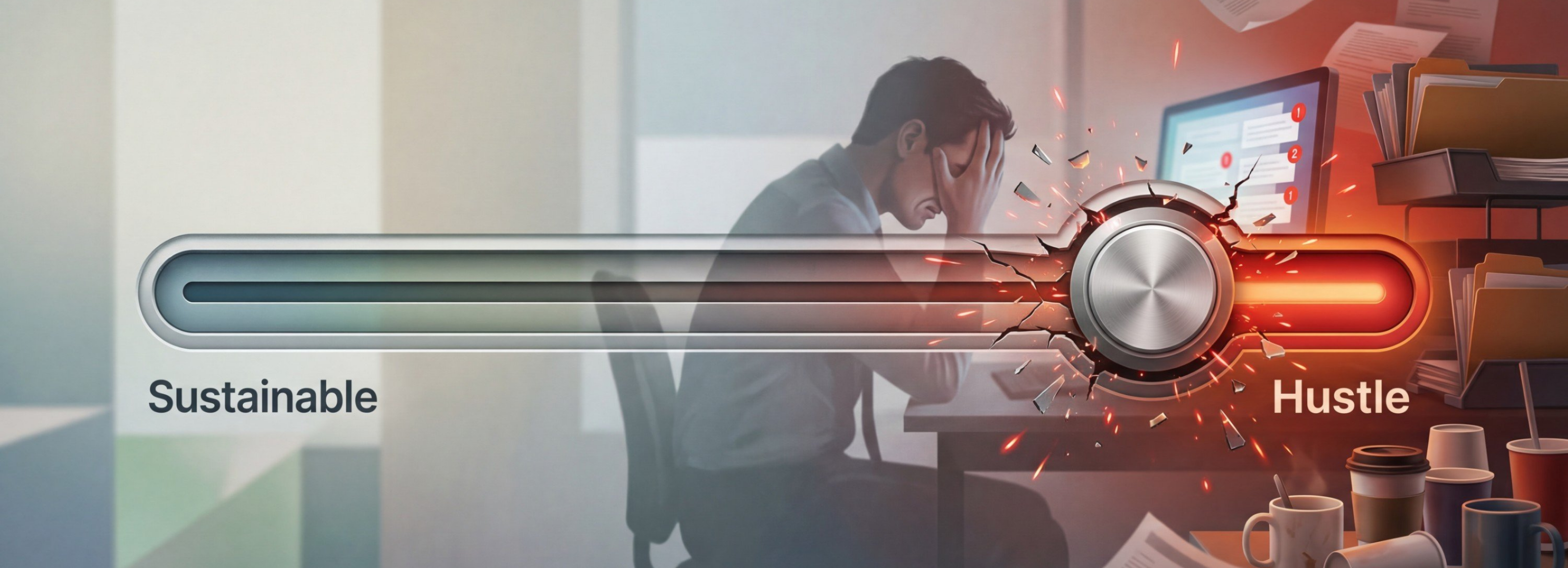

Is hustle culture driving your best employees away?
They take on additional responsibilities, work longer hours, and push themselves to deliver results. In many organizations, these employees become the backbone of team productivity.
But over time, the same pressure that fuels performance can quietly push them toward the exit.
For many employers, this becomes a difficult question: could the very culture that encourages hard work also be driving valuable talent away?
Table of contents
- Why hustle culture looks like strong performance
- The hidden pressure behind high output
- Why your best employees may leave first
- Building a culture that retains talent
Why hustle culture looks like strong performance
In fast-moving workplaces, visible effort often becomes the easiest signal of commitment.
Employees who stay late, respond instantly, and consistently take on extra work appear highly engaged. Managers naturally associate these behaviors with dedication and reliability.
Over time, this creates a subtle workplace norm. Long hours and constant availability begin to feel like indicators of strong performance.
In the short term, this environment can appear highly productive.
The hidden pressure behind high output
Employees who consistently absorb heavy workloads often carry the most pressure within a team.
Ambitious professionals tend to step forward when work increases. They solve urgent problems, support multiple projects, and fill operational gaps when needed.
While this makes them invaluable to the organization, it can also place them in a cycle of constant demand.
Over time, the pressure can begin to erode engagement. Work may still get done, but the motivation behind it slowly changes from enthusiasm to exhaustion.
Why your best employees may leave first
Ironically, the employees who contribute the most energy often have the most options in the market.
High performers build strong skills, develop wide networks, and become attractive candidates for other opportunities.
When the pressure of constant hustle begins to feel unsustainable, these employees are often the first to explore alternatives.
This pattern becomes clearer when looking at workplace burnout trends. McKinsey Middle East highlights that one in three GCC respondents report experiencing burnout symptoms, and respondents in the region report intentions to leave their jobs more than twice as frequently as employees internationally — 36% compared with 16%.
In other words, the employees who power the organization’s output may also be the ones most at risk of leaving when the pressure continues for too long.
Building a culture that retains talent
Retaining top talent often comes down to a few practical shifts: prioritizing impact over long hours, setting realistic workloads, and giving ambitious employees room to grow without constant pressure.
Managers who recognize results rather than just visible effort tend to build stronger and more sustainable teams.
If you're looking to build stronger, more resilient teams, finding the right talent is the first step. You can start hiring qualified candidates on Naukrigulf to connect with professionals ready to contribute and grow with your organization.
Related articles
Are you hiring for hustle instead of talent?
In an interview, one candidate says they’re willing to work late nights, weekends, and take on anything required.Another talks about how they improved a process, solved a complex p...
Read more
Why candidates rarely share their true concerns
During hiring conversations, candidates often appear agreeable, positive, and aligned — even when they have reservations. Employers may assume silence means comfort. In reality, ca...
Read more
The shift from hustle to sustainable performance
Hustle culture was once seen as a competitive advantage.Working longer hours, moving faster, and pushing teams harder often helped organizations deliver results in high-growth phas...
Read more